
Hypnosis for Phobias: How Fears Are Learned, and How to Unlearn Them
by Erika Slater
You live a full life. Work, family, friends, maybe a dog who thinks he runs the house. And yet one fear quietly gets a vote in everything you do. You take the stairs. You skip the trip. You leave an hour early for everything. You stare at a decision for weeks and then don’t make it.
You may feel a bit silly about it. Most of the people I see do. They tell me, “I know it doesn’t make sense,” before they’ve sat down. Here’s the thing: it does make sense. Your brain learned a pattern, and it learned it well. You’re not broken. And patterns can be unlearned. Let me show you how.

In this article:
- What’s the Difference Between a Fear and a Phobia?
- How Are Fears Learned?
- How Are Fears Unlearned?
- Common Fears That Quietly Run Part of Your Life
- What About the Fear of Fainting?
- When Should You Get More Help?
- How Does Hypnosis for Phobias Work?
- What Happens in a Session?
- Frequently Asked Questions
- Where to Go From Here
What’s the Difference Between a Fear and a Phobia?
A fear is your brain’s alarm going off in step with a real risk. A phobia is the same alarm stuck on, firing far louder than the risk calls for, and steering your choices. The feeling is the same in both. The difference is how much of your life it’s running.
Fear is useful. It’s why you look both ways before you cross the road, and why you don’t lean out over a balcony rail. A healthy respect for heights keeps you alive.
A phobia is fear that’s lost its sense of proportion. The glass elevator is perfectly safe, but your legs have decided otherwise. You know the risk is small. Your body didn’t get the memo. So you plan around it, and the planning becomes a habit too.
You don’t need a label to work on this. Fear or phobia, it runs on the same engine, and the way through is the same.
How Are Fears Learned?
Fears are learned the way any habit is learned: through a pattern that repeats. A trigger sets off a feeling, the feeling drives a behaviour, and the behaviour brings a payoff. For fears, the payoff is feeling safe right now. Each time you avoid the thing, your brain learns that avoiding works.
Most fears start one of two ways. Some begin with a bad moment: a fall, a fright, a night alone in a dark house when something went bump. Others are borrowed. Someone you trusted told you heights were dangerous, or you watched one too many films where the dark was where the bad things lived. Either way, your brain filed it under “danger.”
Here’s the pattern, step by step.
- Trigger: the glass elevator, the lights going out, the new job offer, a clock that reads ten minutes later than you planned.
- Feeling: a flush of heat, a racing heart, and the thought “no, not this.”
- Behavior: you take the stairs, leave the lamp on, turn the offer down, or arrive an hour early.
- Payoff: relief, right away.
That last step is the sneaky one. Relief feels like proof you did the right thing. So your brain says, “Good call, let’s do that again.” Each round, the fear gets a little bigger and your life gets a little smaller.
None of this means you’re weak. It means your brain is a good student. We’re going to give it a new lesson.
[VIDEO: HOW FEARS ARE LEARNED, AND UNLEARNED]
Build note: YouTube embed goes here, added in the Text view once the video is published. See Part 4 for the video plan.
How Are Fears Unlearned?
You unlearn a fear by teaching your brain a new ending to the pattern. That takes three things: a calmer body, so the alarm is quieter; rehearsal in your mind, so the new response feels familiar; and small real-life steps toward the thing you avoid, each one repeated until it’s boring.
Calm the body first. A calm body is easier to steer. Spend a few minutes each day on slow breathing or self-hypnosis, at a time when you’re not anxious. If you’d like a guided way to do this, my free self-hypnosis audio teaches a simple way to settle your body and mind in 16 minutes. Listen seated, never while driving.
Rehearse it in your mind. A vivid rehearsal gives your brain a lot of what the real thing gives it, without the risk. So picture the situation you avoid, notice the first flutter, and see yourself breathing through it and staying put. Do this a few times and the real moment feels less new.
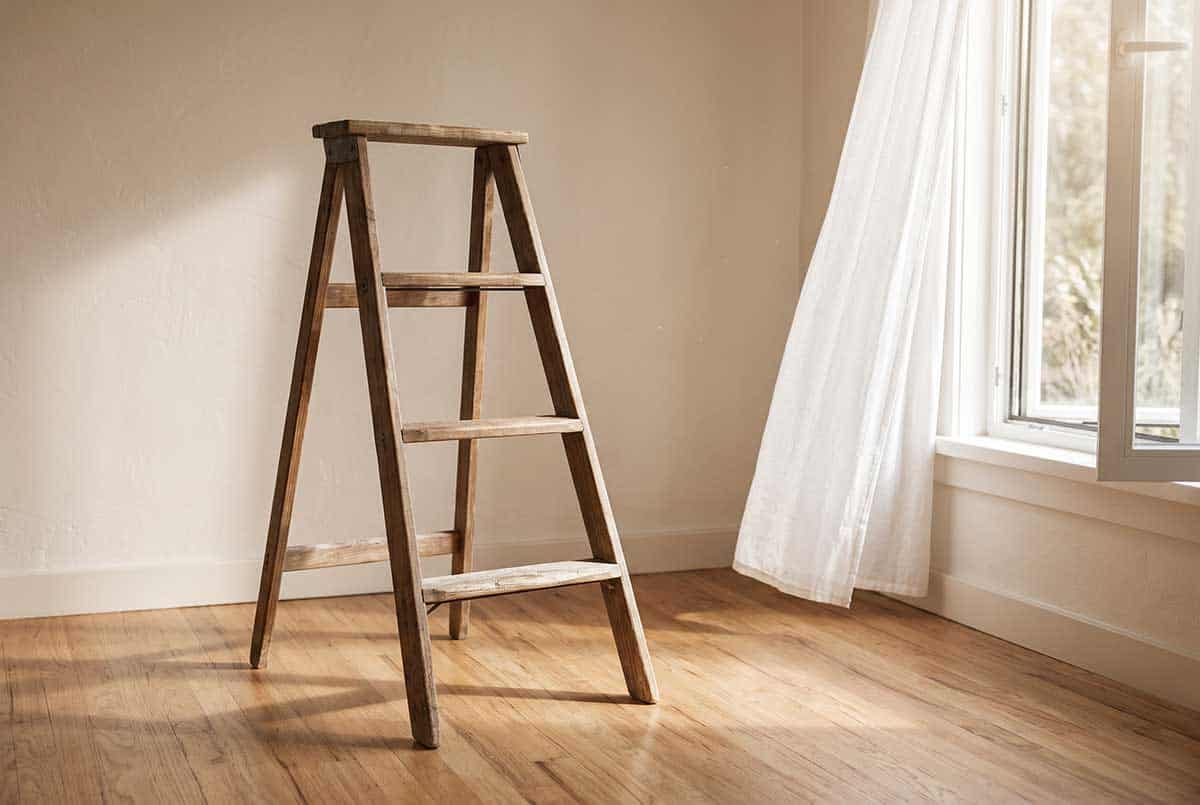
Then take small steps. Not the biggest challenge you can find. A ladder. Write down the situations you avoid, from easiest to hardest, and start at the bottom. Stay until the feeling eases a little. Repeat that rung until it’s dull. Then climb one. Boring is the goal. Once a situation has become boring, you’ve won that rung.
If you’d like help working through these steps, my Phobias and Fears program walks through them with you.
Common Fears That Quietly Run Part of Your Life
The fears below are the ones people most often bring to my office, a little embarrassed, and relieved to hear how common they are. Each one comes with a tip you can try this week. Notice how alike they are underneath. It’s the same pattern wearing five different coats.
Fear of Heights (Acrophobia)
Acrophobia is a strong fear of heights, even when you’re perfectly safe. For some people it’s the top floor of a tall building. For others it’s a step ladder. Vertigo often gets the blame, but that’s a different condition with similar feelings. It costs you the view from the summit and the hotel balcony.
Try this: find a height that makes you a little uneasy but not panicked. A second-floor window will do. Stand there until the feeling gets dull. Keep your eyes on something steady at eye level, not on the drop. Next week, go one floor higher.
Fear of the Dark in Adults
Plenty of adults sleep with a light on and tell no one. Nyctophobia, the formal name, isn’t just for kids. In adults it usually traces back to a frightening moment in the dark, or a story that lodged itself at just the wrong age. Your brain filed the dark under “danger” and never ran the update. (There’s no monster. Your brain just hasn’t checked lately.)
Try this: don’t go from lamp to pitch black in one night. Dim the light a notch each week, or move it one room further away. You’re letting your brain learn, in small doses, that dark is just dark.
Fear of Change (Metathesiophobia)
Metathesiophobia is a strong fear of change. We all feel some of it; change takes away the familiar before it gives you anything back. But when the fear runs the show, you stay in the job, the town, or the routine that stopped fitting years ago. Many of us would rather dance with the devil we know than meet the angel we haven’t.
Try this: write down the one thing you’d actually lose if you made the change. Then write the smallest first step, one you could reverse. Most changes have a brake. Knowing where it is makes the first step easier to take.
Fear of Being Late
A fear of being late isn’t really about clocks. It’s about letting people down, being judged, or walking into a room where every head turns. So you overcorrect. You arrive an hour early and sit in the car, bored and still a little tense. Either way, the fear is running your calendar, not you.
Try this: plan your leaving time, not your arriving time, and add ten minutes, not sixty. Then rehearse, in your mind, arriving with a few minutes to spare and feeling fine about it. You’re teaching your brain what “on time” feels like.
Fear of Making Mistakes
If getting something wrong once cost you dearly, your brain may have decided that mistakes are dangerous. So you don’t start the project, don’t ask the question, don’t try the new thing. It feels like being careful. It’s really a very small life.
Try this: pick one low-stakes thing this week and do it imperfectly, on purpose. Send the email without reading it a fifth time. Then notice what actually happens. Usually, nothing. That “nothing” is the lesson.
What About the Fear of Fainting?
The fear of fainting runs on the same engine as the fears above: a trigger, a rush of feeling, and the urge to escape. It’s common enough, and specific enough, that I’ve written about it on its own page. If your fear is passing out in public, read my guide to overcoming the fear of fainting.
When Should You Get More Help?
If a fear is severe, has lasted a long time, comes with frequent panic attacks, or is stopping you from working, travelling, or seeing people you care about, the right first step is a licensed mental health professional. The same is true if the fear is linked to a traumatic event. Hypnosis can sit alongside that care and support it, but it isn’t a replacement for it.
For the everyday fears above, the ones that shape your choices without stopping your life, hypnosis is a good fit.
How Does Hypnosis for Phobias Work?
Hypnosis helps you work with the part of your mind that runs habits automatically, so change stops feeling like a fight. A fear fires fast, before you’ve had time to think. Hypnosis for phobias reaches the part of your mind that fires it and teaches it a calmer response at the trigger point.
If hypnosis is new to you, it’s a natural, focused state of attention, a bit like being lost in a good book. You stay aware and in control the whole time. No pocket watch, and nobody clucks like a chicken. You can read more about what hypnosis is.
In my Phobias and Fears program, we follow four steps.
Clarify the Target
We get specific. Which situations set off the fear? What would you like to feel instead: steady, curious, maybe even a little bored? Clear targets make for clear sessions.
Find the Pattern
We map your trigger, feeling, behavior and payoff, with your details in it. Most people are surprised at how predictable their fear is once it’s on paper. Predictable is good news. Predictable can be changed.
Install the Upgrade
In hypnosis, we rehearse a new response at the trigger point. You picture the moment, notice the first flutter, and answer it with a slow breath and steady feet. We use identity language too: “I’m someone who can feel the alarm and stay put.” Then we rehearse the exact situations you’ve been avoiding, in your mind first, so they’re familiar when you get there.
Reinforce in Real Life
You leave with a short daily practice, two to five minutes, and a plan for the days it doesn’t go well. Slips happen. A slip isn’t failure; it’s information. We course-correct, with no shame attached, and keep going.
Hypnosis for Fear of Heights: What the Four Steps Look Like
Say your fear is heights. Our target: standing at the hotel balcony rail on your next trip, feeling steady. The pattern: the rail is the trigger, jelly legs are the feeling, stepping back inside is the behavior, and relief is the payoff. In hypnosis, we rehearse walking to the rail, feeling the first wobble, breathing, and staying. Then you practice on a real second-floor landing, then a third, until a balcony is just a balcony with a nice view. Hypnosis for fear of heights doesn’t remove your good sense around real drops. It turns the alarm down to a level that matches the risk.
What Happens in a Session?
A session starts with a conversation, not a swinging watch. We talk about where the fear shows up and what you’d like instead. Then I guide you into a calm, focused state. You stay aware and can speak at any time. We rehearse the situations you’ve been avoiding, and you leave with something to practice.
Sessions happen in my office in Mashpee on Cape Cod or online, and both work well for fears. You set the pace, and nothing happens that you haven’t agreed to. You won’t be asked to face the real thing in a session. The rehearsal happens in your mind first, and the real-life steps come later, at a size you choose.
Frequently Asked Questions
Can hypnosis fix a phobia in one session?
I can’t promise that, and I’d be wary of anyone who does. Some people notice a real shift after one or two sessions. Most need a few sessions plus daily practice between them, and that practice is what makes the change hold. How long you’ve had the fear, and how much of your life it touches, both matter.
Does hypnosis for fear of heights work?
Hypnosis is well suited to a fear of heights because the fear runs on automatic: a trigger, a rush of feeling, and the urge to step back. In hypnosis we rehearse a calmer response to that exact moment. Then you practice in real places, one small step at a time. Hypnosis supports that work; it doesn’t do it for you.
What is metathesiophobia?
Metathesiophobia is the formal name for a strong fear of change. Everyone feels some unease when life shifts. With metathesiophobia, the unease is big enough that you stay put in situations that stopped fitting you long ago. It’s a pattern your brain learned in order to feel safe, and like other fears, it can be unlearned.
Is a fear of being late a real phobia?
For some people, yes. Worrying about being late is normal. A phobia of being late takes over your schedule. You arrive an hour early, feel tense anyway, and plan your whole day around the clock. Whatever you call it, it runs on the same pattern as other fears, and the same approach helps.
Can I do hypnosis for a phobia online?
Yes. I work with clients online as well as in my Mashpee office, and fears respond well either way. You’ll need a quiet room, a comfortable chair, and a steady internet connection. Many people find starting at home easier. We build out from there.
Where to Go From Here
If this sounds like you, you don’t have to do this alone. A fear that quietly runs part of your life is still a pattern your brain learned, and patterns can change. Let’s make a plan that fits your real life. Pick the step that fits where you are today.
Start with a free self-hypnosis lesson.
My free 16-minute audio, The Float-In Method, teaches you a simple way to calm your body and mind. Practice it before the thing you’ve been avoiding: the glass elevator, the lights going out, the big decision. Listen seated, never while driving. Get the free audio
Go deeper with the Mind Shift Method.
This is the full program the free lesson comes from. It uses short videos, simple guides and hypnosis audio to help you change a pattern that keeps repeating, at your own pace. Learn about the Mind Shift Method
Talk with me.
If you’d like one-on-one help, book a free 20-minute consultation. We’ll talk about where the fear shows up and whether working together is a good fit. No pressure, just a conversation. Book your free consultation
Erika Slater, CH, is a certified hypnotist who has helped people change unwanted patterns since 2004. She works with clients in person in Mashpee on Cape Cod and online.
CATEGORIES
FEATURED POSTS
Interested in making a significant change in your life and interested in learning more about what I do and how I do it? Discover my hypnotherapy services here or contact me here.
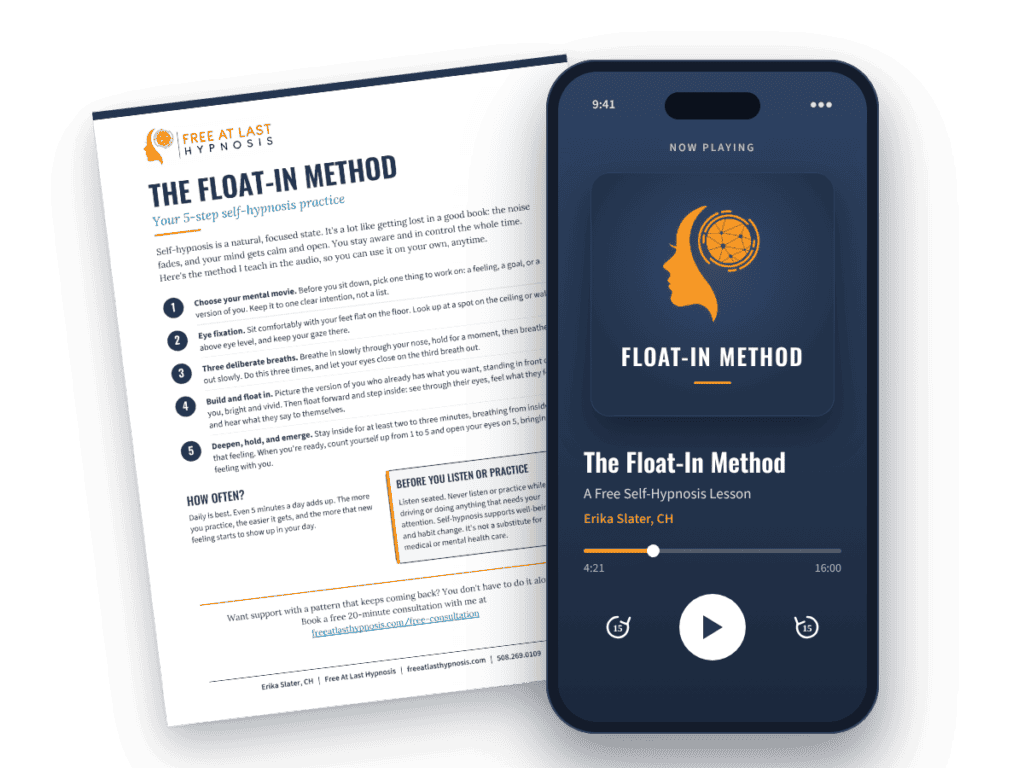
Learn Self-Hypnosis in 16 Minutes, Free
In this free audio lesson, I'll teach you the float-in method. It's a simple way to work with your mind instead of fighting it. You'll do it once with me guiding you. Then you can use it on your own, anytime. A one-page guide comes with it.
